
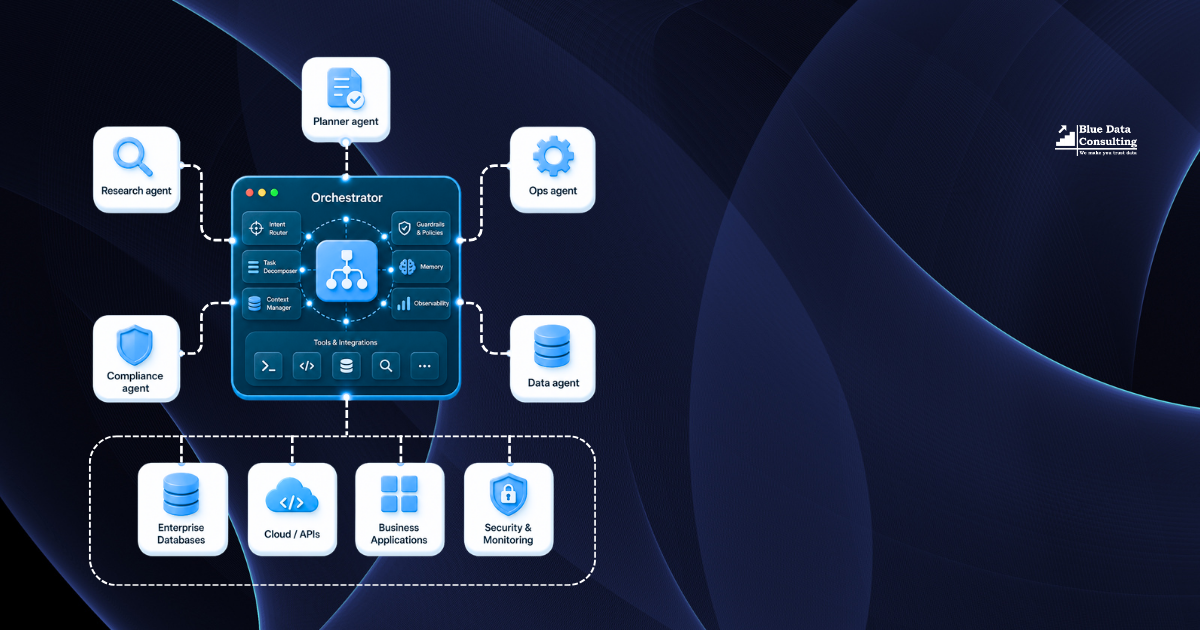
The AI Agent Control Plane
Anshu Pandey
Author
- Agent programmes rarely fail on model capability. They fail at the seams.
- “Multi-agent” is three problems with three owners: decomposition, integration, governance.
- The spine is deterministic, only the leaves are probabilistic. The model is invoked at nodes within the process, and never owns it.
- Agents propose, gates decide, code acts. Autonomy is earned per class, on evidence.
- If the tenth agent costs what the second did, you built an AI agent control plane.
Where the nine months went
The demo lands. Nine minutes, no stumbles, and somebody says ship it.
- Week 2One agent, one system, one happy path, wired by hand.
- Month 1A pilot. Fourteen users.
- Month 3A slide claims 94% accuracy. Still no write path.
- Month 6Change board sign-off, PHI nobody scoped, no audit trail.
- Month 9Reframed as a learning exercise. Team reassigned.
Nobody did anything stupid, and the model was fine. The model nearly always is. What killed it was the distance between what was demonstrated and what had to survive.
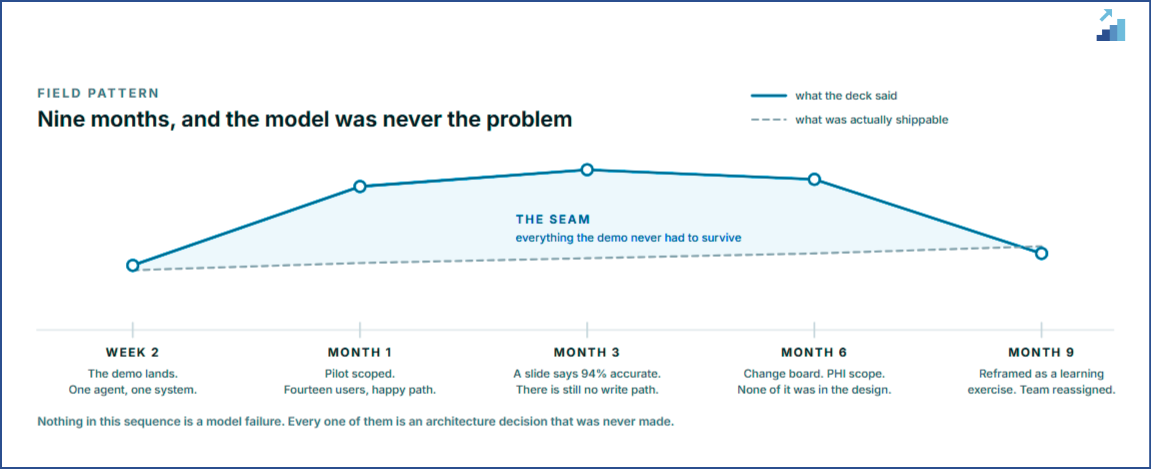
Fig 1. The gap between the lines is everything the demo never had to survive.
One agent against nine upstream systems and four owning teams. Forty minutes against two weeks of wall-clock time. Read-only against writes that cannot be replayed. That is an architecture gap, not a prompt engineering gap, and what is new is that one component in the topology now has opinions.
The organisations getting durable value are not the ones with the most agents. They are the ones that built an AI agent control plane first.
Three problems, not one
Three things went wrong in month six, treated as one problem with one owner. That is why none got fixed.
- The change board was a process problem, owned by the process owner.
- The missing write path was an integration problem, owned by the system owners.
- The agent that had grown to nineteen tools was a decomposition problem, owned by platform engineering.
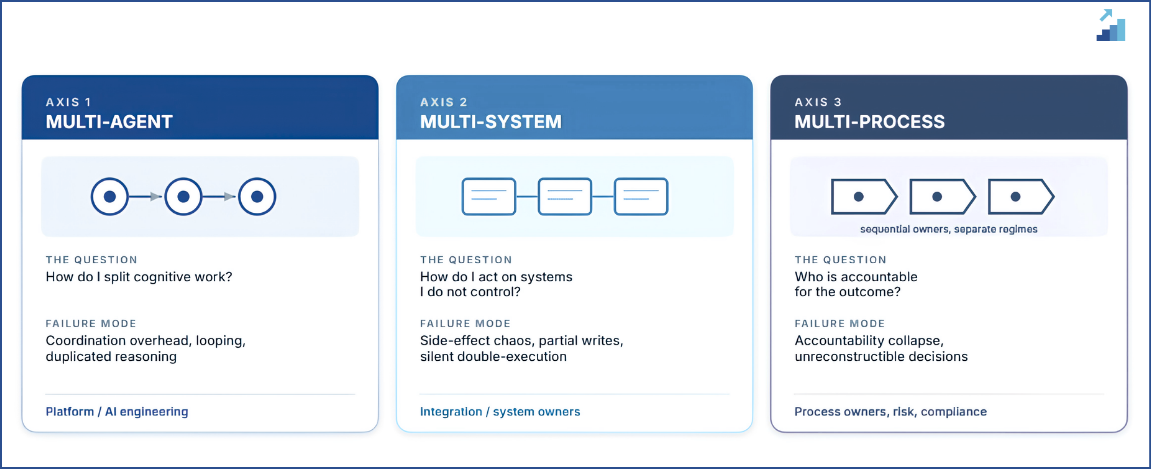
Fig 2. Three orthogonal axes. Answer only one and it stalls at scale.
| Axis | Owner | Failure signature | The question that settles it |
|---|---|---|---|
| Multi-agent | Platform engineering | Looping, duplicated reasoning | Why is this not one agent? |
| Multi-system | System owners | Partial writes, double-execution | What if the call succeeds and the caller never hears back? |
| Multi-process | Process owners, risk | Unreconstructible decisions | In six months, who reconstructs this, and from what? |
The control plane's reference architecture
Keep the control plane, the agent layer and the integration layer apart. Collapse them and nothing downstream can be governed.
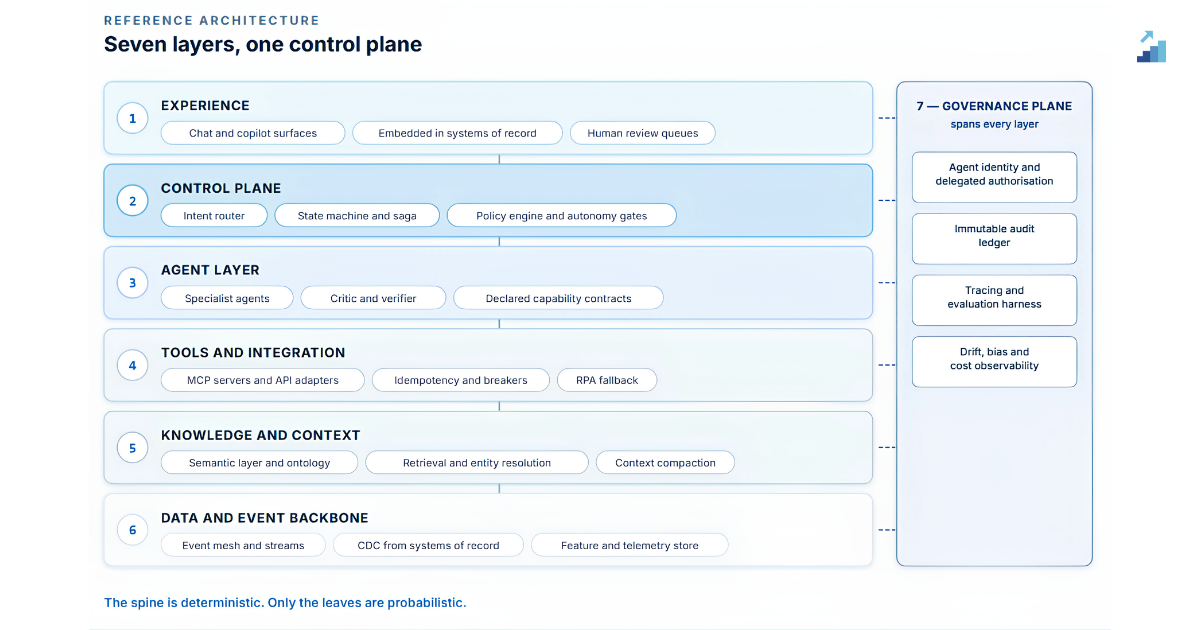
Fig 3. Six layers, plus a governance plane spanning all of them.
Four principles do most of the work.
- The spine is deterministic, only the leaves are probabilistic. Anything with an SLA or a financial side effect is an explicit state machine.
- Agents are services with contracts, not personas. A name and a system prompt is not a contract.
- Context is a managed resource. The binding constraint at scale is context hygiene, not model quality.
- Retrieved content is data, never instruction. Gate the action, not the justification.
| Field | What it declares | What breaks without it |
|---|---|---|
| Purpose | The one job, in a sentence | Scope creep into a mega-agent |
| Input and output schema | What it accepts and returns, typed | Prose handoffs nobody can test or replay |
| Tool scope | Exact tools, and which of them write | A blast radius nobody can state |
| Autonomy ceiling | Its highest level on this process | Sandbox autonomy promoted to production |
| Model requirement | A capability class, never a model name | A contract that cannot change environment |
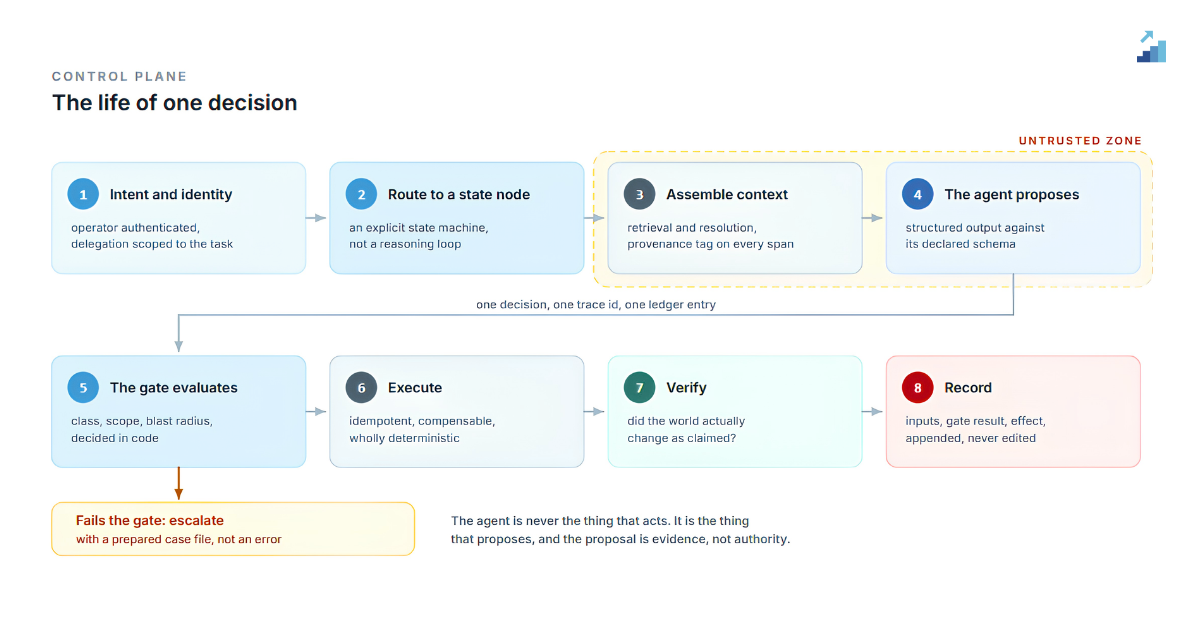
Fig 4. One trace id. Only the two stages inside the dashed boundary touch anything untrusted.
Notice what the agent does not do. It does not decide, act, or close the loop. It proposes, in a shape the gate can evaluate without trusting the reasoning attached to it.
The seams that break it
A seam is what happens between two boxes when one is having a bad day. The one that ends programmes is the partial write: three steps take effect, the fourth fails, and nothing knows the state of the world.
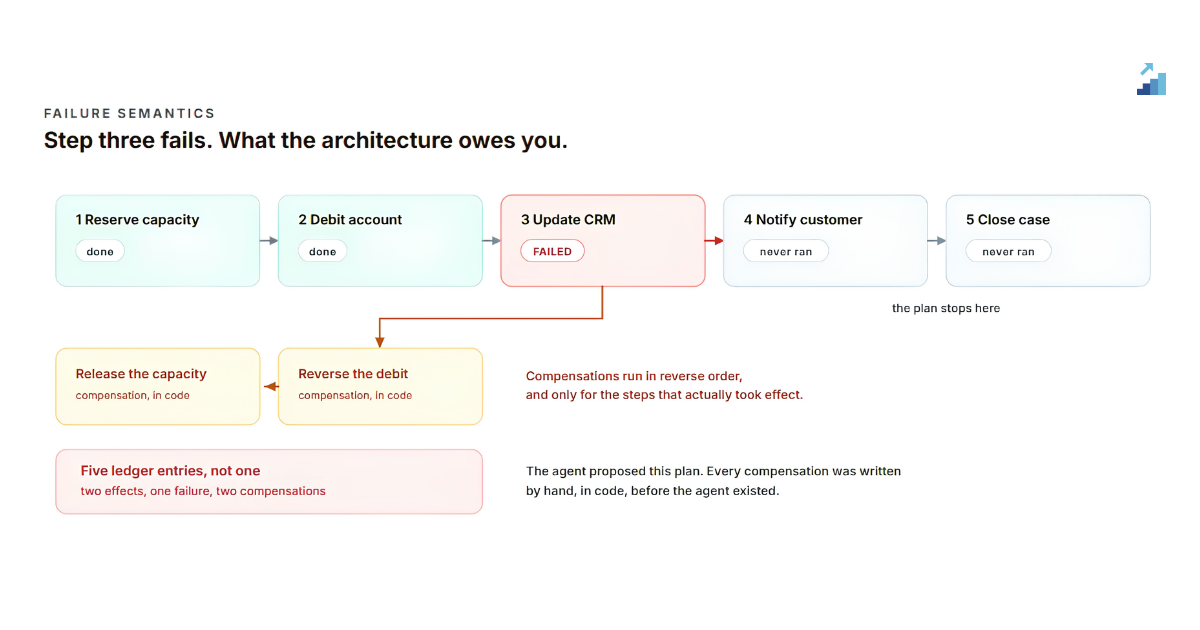
Fig 5. The forward path is the easy half. The compensations are the half that matters.
- Idempotency keys and client-generated request ids, so a retry cannot double-execute.
- A compensation per step, written in code before the agent exists.
- An explicit pending state for long approvals, never a retry loop.
None of it is model work. It is the distributed systems engineering a chat interface let everyone postpone, and the postponement is what arrives in month six.
Autonomy is earned
Six clean weeks in a sandbox, someone asks whether a human is still needed, and a flag gets flipped. Sandbox traffic is curated. Production contains the malformed, the adversarial, and the case that is technically in scope and obviously should not be.
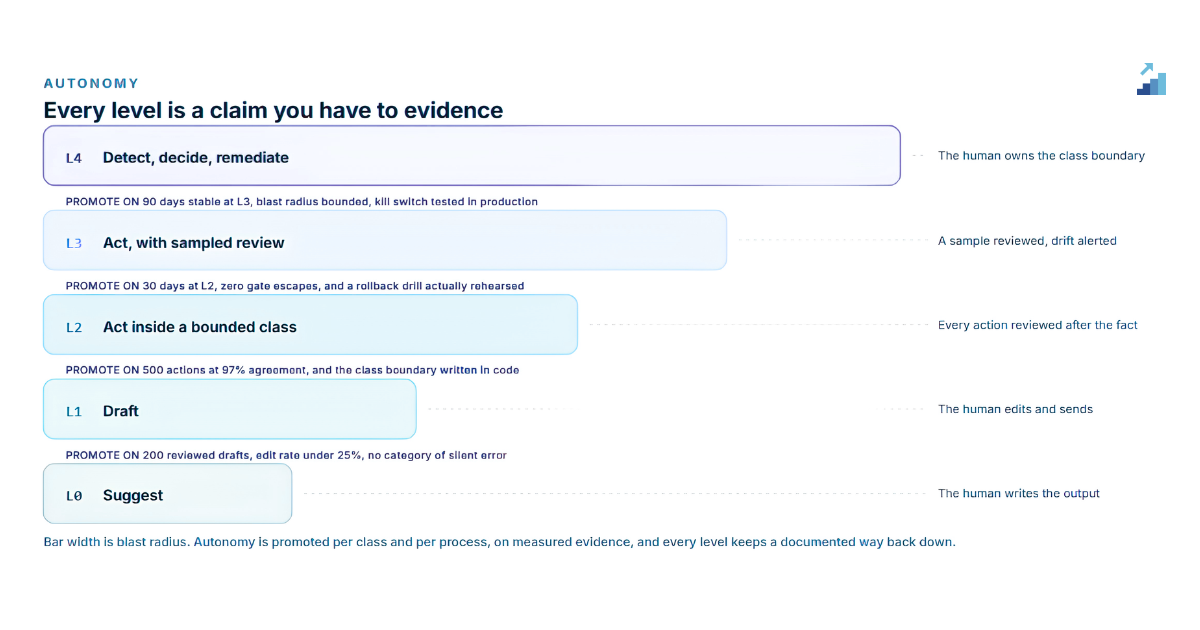
Fig 6. Bar width is blast radius, not capability.
| Level | The agent may | Evidence to reach it | The way back down |
|---|---|---|---|
| L0 Suggest | Offer options only | None; this is the floor | — |
| L1 Draft | Produce, never send | 200 drafts, edit rate under 25% | Revert to L0 |
| L2 Bounded act | Act inside a class defined in code | 500 actions at 97% agreement | Narrow the class, not the level |
| L3 Sampled act | The same, at volume | 30 days at L2, zero gate escapes | Raise the sampling rate |
| L4 Closed loop | Detect, decide, remediate | 90 days at L3, kill switch tested | Kill switch, then back to L2 |
- Promotion is per class, never per project. One agent can sit at L4 for one incident class and L0 for the rest.
- The way down is built before the way up is used. A kill switch never pulled is a comment.
What it looks like in practice
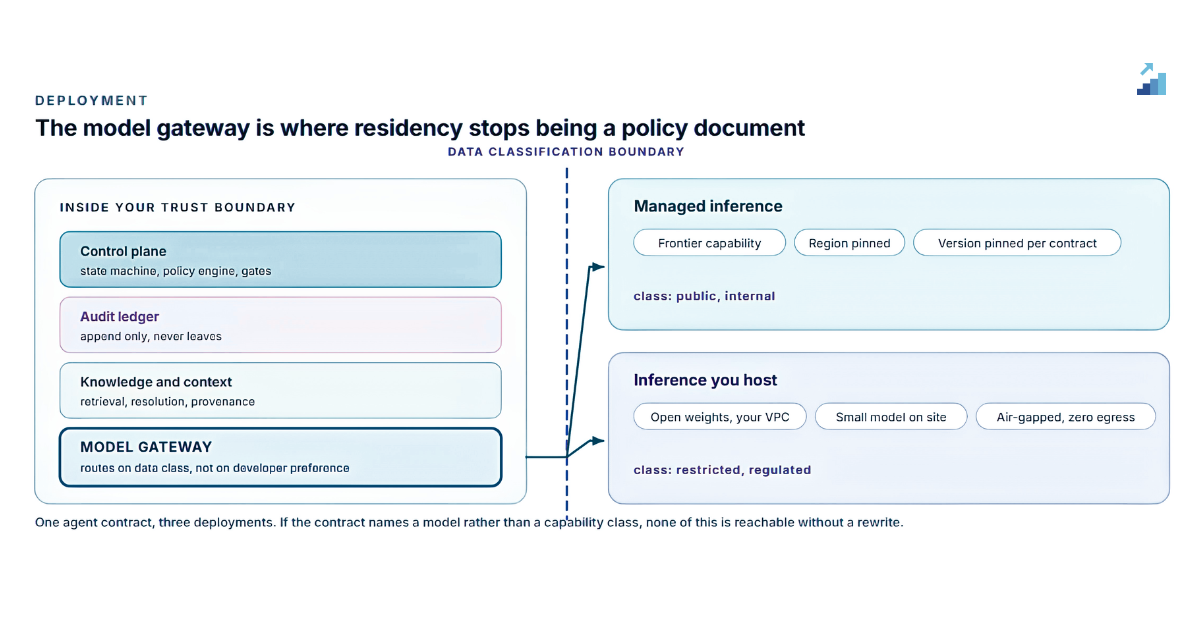
Fig 7. The gateway routes on data class, which makes residency executable.
Recipe data cannot leave a fab, so the same contract runs against a small on-site model. Name a model instead of a capability class and that becomes a rewrite. 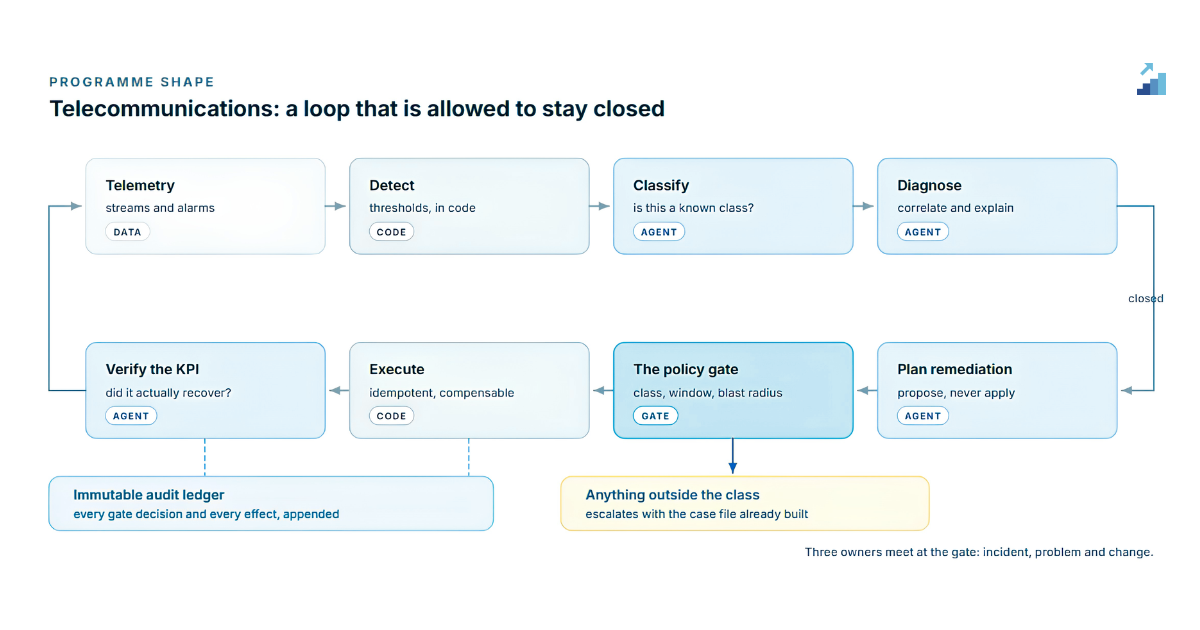
Fig 8. The loop stays closed because the gate is code and the class is small.
Four components sit in that telecom loop and only two are agents. The team spent four months on the gate, the compensations and the ledger before writing the first one.
Anti-patterns, and where to start
Each is a locally sensible decision that becomes a problem at the seam.
The mega-agent
Thirty tools, one system prompt, no decomposition.
Tool selection degrades sharply. Demos fine, unshippable.Chat as the integration layer
Agents passing prose to each other.
Unschema’d handoffs are untestable handoffs.Sprawl without a control plane
Six teams, six agents, duplicated retrieval and auth.
SOA-without-governance, new label.Autonomy by promotion, not evidence
Sandbox autonomy carried into production.
Autonomy earned in one distribution does not transfer.Governance retrofitting
Discovering PHI scoping or air-gap needs in month six.
These constraints change the architecture, not the config.Trusting the context window
Retrieved text and operator intent concatenated into one prompt.
Untrusted content is an instruction channel. Gate the action, not the justification.Start with one process, not one technology.
- A measurable baseline, so agreement has something to compare against.
- A survivable failure cost, so the first gate escape is a lesson, not an incident.
- Not the one that looks best in a board update.
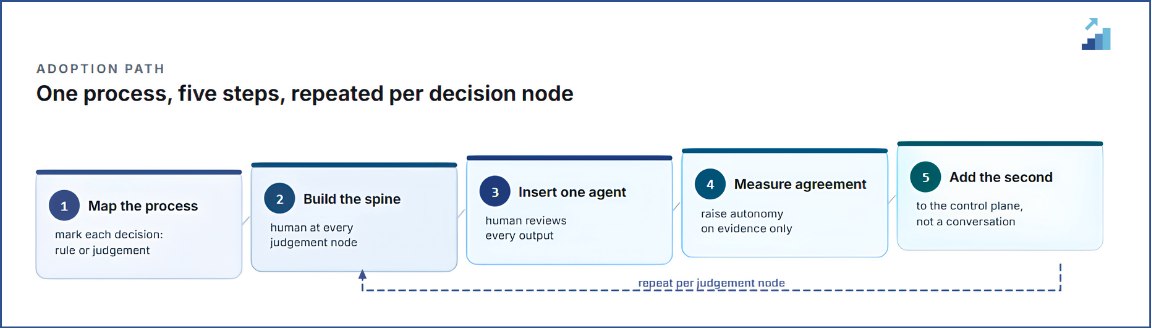
Fig 9. Autonomy rises on measured agreement, never on promotion from a sandbox.
| Weeks | What you build | What you show at the end |
|---|---|---|
| 1–2 | The process map, decisions marked rule or judgement | Judgement nodes counted by decision volume |
| 3–6 | The deterministic spine, human at every judgement node | The process running end to end, no model in it |
| 7–9 | One agent at the busiest node, held at L1 | Agreement rate per node, disagreements kept |
| 10–12 | Gate, ledger and evaluation harness | Any decision replayed, and a rehearsed rollback |
| 13 on | The second agent, wired to the control plane | Marginal cost of agent three, measured |
Run it again with the spine first. The week-two demo is worse: a state machine, humans at every judgement node, no model at all, and nobody says ship it. By month six the change board meets a gate that already exists, so it takes a fortnight. By month nine the second agent costs a fraction of the first.
The test is not how many agents you run. It is whether the tenth costs what the second did, and that is a property of the control plane, not of the agents on top of it.
Frequently asked questions
What is an AI agent control plane?
The layer that sits between deterministic business logic and probabilistic model calls. It holds the state machine, policy engine and autonomy gates, so agents propose actions but code decides and acts on them. The spine is deterministic; only the leaves, where the model is invoked, are probabilistic.
Why do enterprise AI agent programmes fail?
Most fail at the seams between systems, not on model capability. Three distinct problems get treated as one: decomposition, integration, and governance — each with a different owner, which is why none of them get fixed when they surface together.
How is AI agent autonomy measured or earned?
Through a five-level ladder: Suggest, Draft, Bounded act, Sampled act, and Closed loop. Promotion to each level requires a measured volume of agreement in production, not sandbox testing, and every level has a defined way back down.
How long does it take to build an AI agent control plane?
Around ninety days end to end — mapping the process, building the deterministic spine, introducing the first agent at the lowest autonomy level, adding the gate and evaluation harness, then adding a second agent at a fraction of the original cost.
Working through this for your own architecture? Blue Data Consulting builds multi-agent enterprise platforms across telecoms, semiconductor manufacturing and healthcare. Talk to our architecture team.
Anshu Pandey
Technology specialist and regular contributor at BlueData Consulting, sharing insights on machine learning, cloud architectures, and digital transformations.