
Google Cloud vs. AWS for AI Engineering
Abhishek Bhagat
Author
Two philosophies for building enterprise AI in 2026: Amazon's model broker versus Google's unified stack. Here's what actually decides the winner, past the token pricing.
Welcome to the frontier of cloud computing. The AI landscape in 2026 has moved well past the chatbots and basic generative models we experimented with just a few years ago. Enterprise AI today is about autonomous systems, multimodal intelligence, and genuinely complex agentic workflows. As a cloud engineer at BlueData Consulting, I spend my days architecting, deploying, and optimizing AI infrastructure for clients across demanding industries. The single most frequent question I hear from CTOs and engineering leads is a familiar one, with a new twist: "Should we build our primary AI infrastructure on Google Cloud Platform or Amazon Web Services?"
At BlueData, we help enterprise clients navigate this shifting landscape, and we've seen plenty of companies treat this as a price war, comparing rate cards for raw token generation and nothing else. That misses the architectural nuances that compound over time: how data pipelines scale, how security perimeters are drawn, and how engineering teams manage the deployment lifecycle from prototype to production.
The choice between GCP and AWS for modern AI workloads isn't just about compute instances or block storage costs anymore. It's an infrastructure commitment that will shape your architectural strategy for years. Both platforms have poured billions into custom silicon, proprietary foundation models, and unified ML platforms, but they've taken fundamentally different approaches to the enterprise AI puzzle. In this guide, we'll go deep on the architecture, the hardware accelerators, the MLOps lifecycles, and the cost dynamics of Google's Vertex AI and Amazon's Bedrock.
01 - The Core Philosophies: Unified Stack vs. Model Broker
To understand the GCP vs. AWS debate in 2026, start with what each platform was built to do. Vertex AI and Bedrock represent two distinct paths to production generative AI, and each carries its own trade-offs.
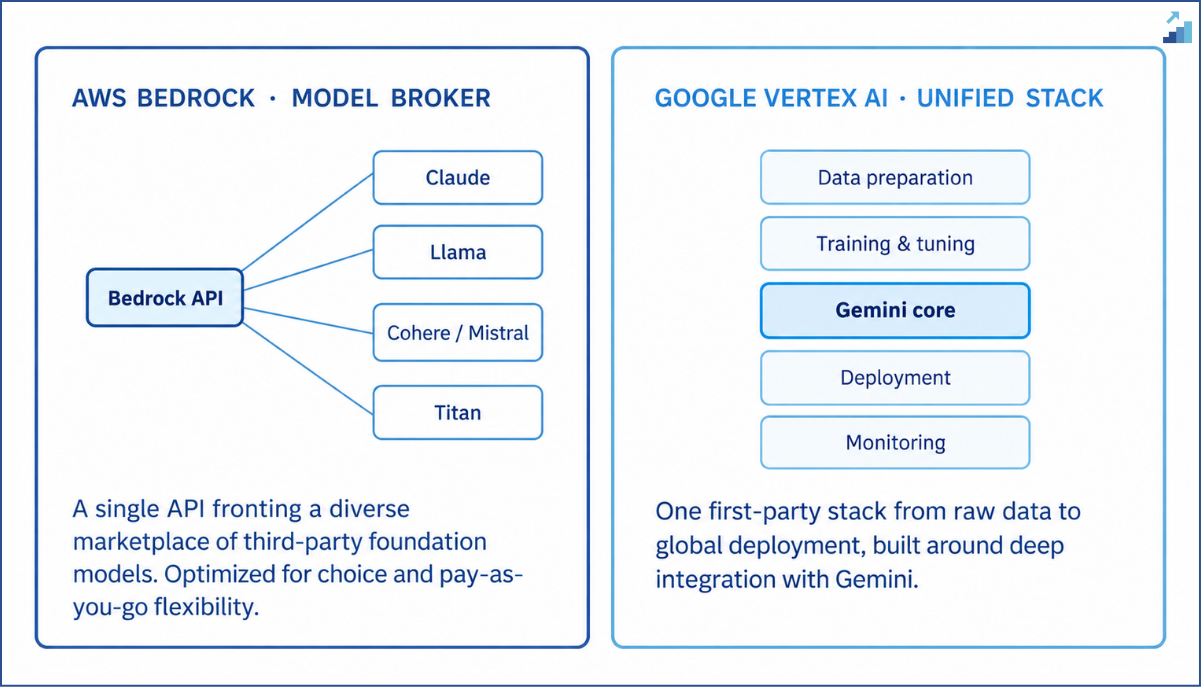
Fig.1 - Two Philosophies for shipping generative AI: broker vs. stack.
Bedrock operates as a robust, serverless model broker, designed to front a diverse array of third-party foundation models behind one unified AWS API. Through Bedrock you can reach Anthropic's Claude family, Meta's Llama iterations, Cohere, Mistral, and Amazon's own Titan models. The philosophy is choice, flexibility, and pay-as-you-go simplicity: if an efficient new open-source model ships tomorrow, AWS is well positioned to add it to the Bedrock marketplace quickly. Teams that need to experiment or keep flexibility as the model landscape evolves find that menu genuinely valuable, routing complex reasoning to Claude, cost-sensitive inference to a lighter Llama model, and document retrieval to Titan Embeddings. This decoupled structure avoids vendor lock-in at the model layer.
Google took a more centralized path, building Vertex AI around a first-party, tightly integrated stack. Vertex AI is the native home for Google's Gemini family; it does include a curated Model Garden of open-source options, but its real strength is deep integration with the Gemini architecture itself. If your organization wants Gemini's large context windows or its native multimodal capabilities, Vertex AI is the most direct, lowest-latency path available. It isn't just an API router: it's a unified ML platform covering the lifecycle from data preparation to global deployment.
The decision often comes down to this split: if you've standardized on Claude for output quality or contractual reasons, Bedrock is the managed path that ships it securely. If you want Gemini's long context windows and first-party multimodal grounding for vision tasks, Vertex AI is the managed home built to handle it at scale.
02 - Hardware Wars: GPUs, TPUs, and Custom Silicon
Software is only as good as the silicon underneath it, and that's where the cost and performance battles are really fought. In 2026, the silicon landscape is dominated by the rivalry between NVIDIA GPUs and custom accelerators: Google's Tensor Processing Units and Amazon's Trainium chips.
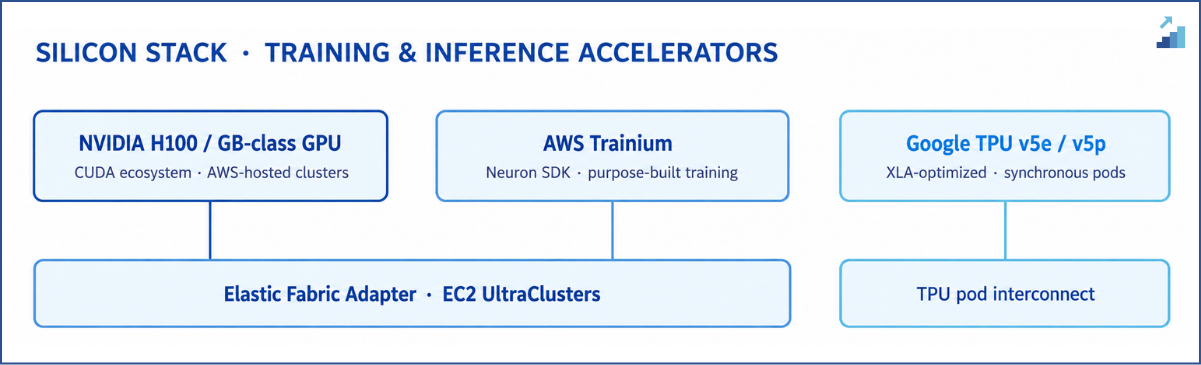
Fig. 2 - Where each platform's accelerators sit in the training stack.
AWS heavily prioritizes its historic partnership with NVIDIA, maintaining strong market dominance in GPU availability. High-end instances clustered with H100-class and newer GPUs are the flagship choice for heavy training workloads, offering large memory bandwidth per GPU and high networking throughput through Elastic Fabric Adapter. Teams relying on the established CUDA ecosystem get raw horsepower for training foundation models from scratch. AWS has also invested heavily in Trainium, purpose-built for deep learning training: Trainium compiles large language models into a proprietary format for meaningful power efficiency and cost savings over GPU inference, though porting existing models requires AWS-specific Neuron tooling, which introduces a degree of lock-in.
Google counters with its Tensor Processing Units: custom ASICs that already power Search, Translate, and the Gemini ecosystem internally. The latest generations, TPU v5e and v5p, offer strong performance for large-scale ML workloads, and a TPU pod can deliver massive compute linked by a low-latency interconnect. TPUs excel at training large models thanks to their synchronous architecture, but they require code optimized for XLA to get the full benefit.
On raw pricing, the battle is close and varies by region and instance configuration. AWS often has competitive on-demand GPU rates; GCP counters with aggressive spot pricing on TPUs and a tightly integrated software environment. In our Total Cost of Ownership work with clients, the winner is context-dependent: for short-term training sprints, GCP's preemptible TPUs often win on price; for long-term, mixed training-and-inference workloads, AWS's ecosystem maturity and regional availability often tip the scale in its favor. At real production scale, for instance a support-assistant feature processing hundreds of millions of tokens a month, on-demand Bedrock spend can climb into the tens of thousands of dollars, and it grows faster than most FinOps teams can forecast. Vertex AI pushes back on that with aggressive caching economics and sustained-use discounts tailored to heavy Gemini usage.
03 - Data Gravity and MLOps: Where Does Your Data Live?
Data gravity is close to a law of physics in the AI era: applications and compute gravitate toward the datasets they need to process. When choosing between GCP and AWS, where your enterprise data already lives is often the deciding factor.
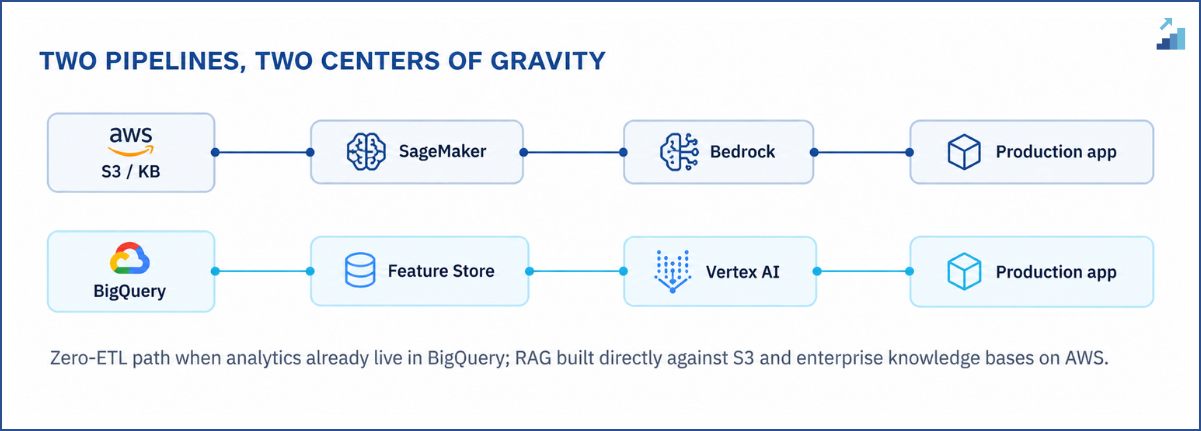
Fig. 3 - Data-to-model pipelines: AWS-native vs. BigQuery-native.
If your organization is deeply AWS-native, Bedrock grounds its models directly against S3 buckets and managed knowledge bases, pulling from sources like SharePoint and Confluence so your team can wire up Retrieval-Augmented Generation without leaving the AWS account perimeter. AWS leans on SageMaker for the heavier lifting of custom training, fine-tuning, and deployment, with built-in algorithms, automatic model parallelism, and managed hyperparameter tuning.
On MLOps maturity for workflows that go beyond pure inference, Vertex AI tends to separate itself. Google offers Vertex AI Pipelines, a managed Model Registry, continuous Model Monitoring, and a Feature Store as one coherent stack, and teams building continuous training and evaluation pipelines generally find the tooling more unified. The native integration with BigQuery is arguably Vertex AI's most underrated strength: if your analytics already run on BigQuery, that integration creates a near-zero-ETL path from data to model, letting you do embedding generation, vector search, and inference right where the data lives. Routing a model through a third-party wrapper on a different cloud adds configuration overhead without a clear performance upside, which makes GCP the logical choice for heavy BigQuery users.
04 - Building the Future: Agentic Workflows and Autonomy
We've moved past simple prompt-and-response interfaces. The current frontier is agentic workflows, where AI agents use tools, access databases, and execute multi-step plans to solve real business problems. Both providers have recognized the shift and shipped dedicated services for it.
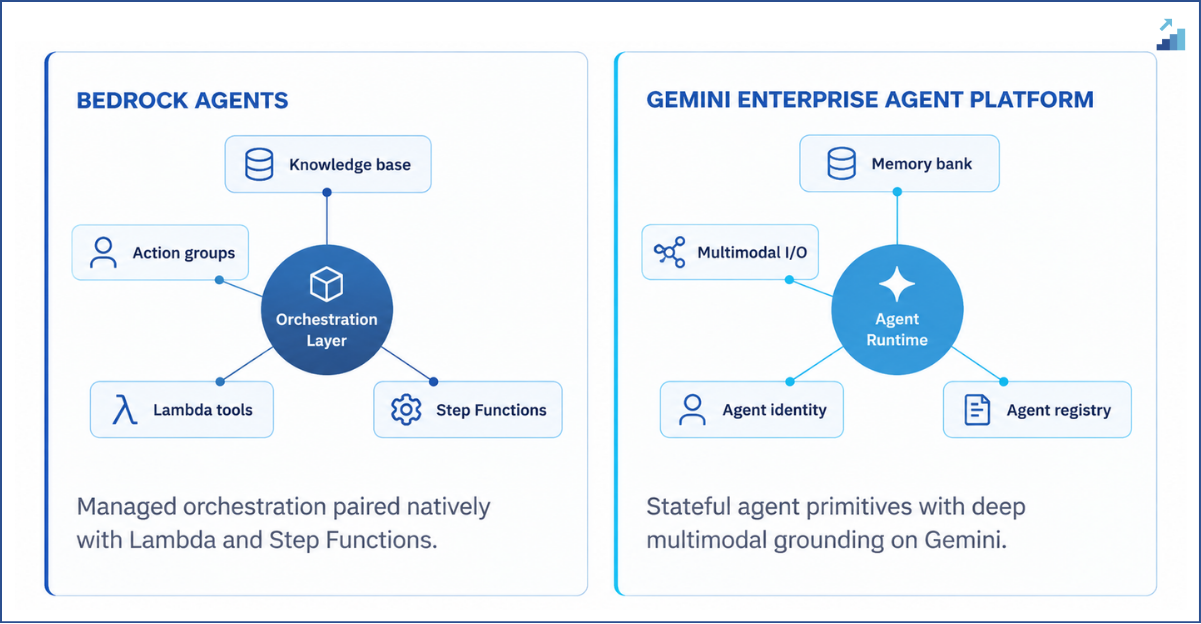
Fig. 4 - Two approaches to agent orchestration and governance.
AWS offers Bedrock Agents: a managed, scalable orchestration layer where you define the tools, knowledge bases, and action groups, and Bedrock handles runtime orchestration behind the scenes. That abstraction cuts operational overhead compared to building orchestration from scratch, and it pairs naturally with Lambda and Step Functions, a strong fit for teams that want managed function calling tied into an existing AWS serverless architecture.
Google has answered with the Gemini Enterprise Agent Platform, the next evolution of Vertex AI. It lets organizations build, scale, and govern long-running agents that retain context over time, with dedicated agent primitives and stronger multimodal grounding for vision and document-heavy workflows running natively on Gemini. The platform includes an Agent Runtime and a persistent Memory Bank, alongside governance tools like Agent Identity and a centralized Agent Registry. For teams building stateful systems that need to see, hear, and interact with the outside world, GCP's agentic primitives are a genuinely strong playground.
05 - Security, Compliance, and Enterprise Readiness
No serious cloud architecture discussion is complete without security and compliance. In regulated industries like FinTech and healthcare, being able to prove compliance to auditors matters just as much as a model's accuracy.
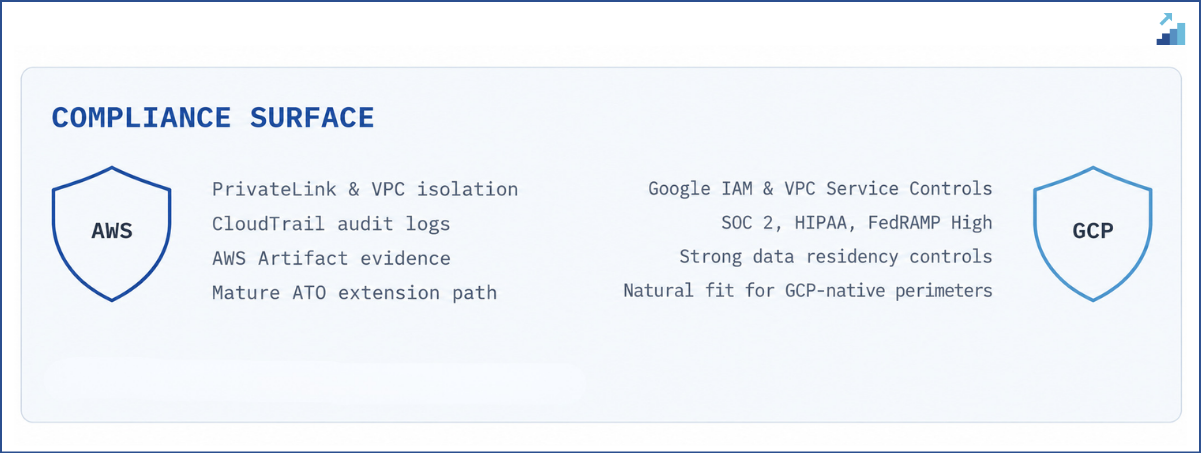
Fig. 5 - Where each platform's compliance tooling leans.
AWS holds a noticeable, well-established advantage in its compliance toolkit. Bedrock operates with strict data privacy architecture: customer data is never used to train the underlying foundation models, and model invocations happen inside your VPC via AWS PrivateLink. Config rules, detailed CloudTrail logs, and AWS Artifact provide audit evidence on demand, which makes the process measurably less painful for clients handling protected health information or financial data. If you already have an Authority to Operate on AWS, extending that coverage to Bedrock is fairly direct.
Google is closing the gap quickly with Identity and Access Management alongside VPC Service Controls, strong data residency options, and broad governance surfaces. Vertex AI carries SOC 2, HIPAA, and FedRAMP High certifications, though its evidence-generating tooling is sometimes seen by compliance teams as slightly less automated than AWS's more mature ecosystem. For teams already GCP-native, though, the existing security perimeter extends naturally to Vertex AI, which makes internal security reviews faster and considerably less painful.
06 - The Verdict: Which Cloud Wins Your Next AI Workload?
Choosing the right cloud for AI engineering in 2026 isn't about finding an objectively perfect platform; it's about finding the best strategic alignment with your organization's existing data gravity, your team's operational expertise, and your long-term model strategy.
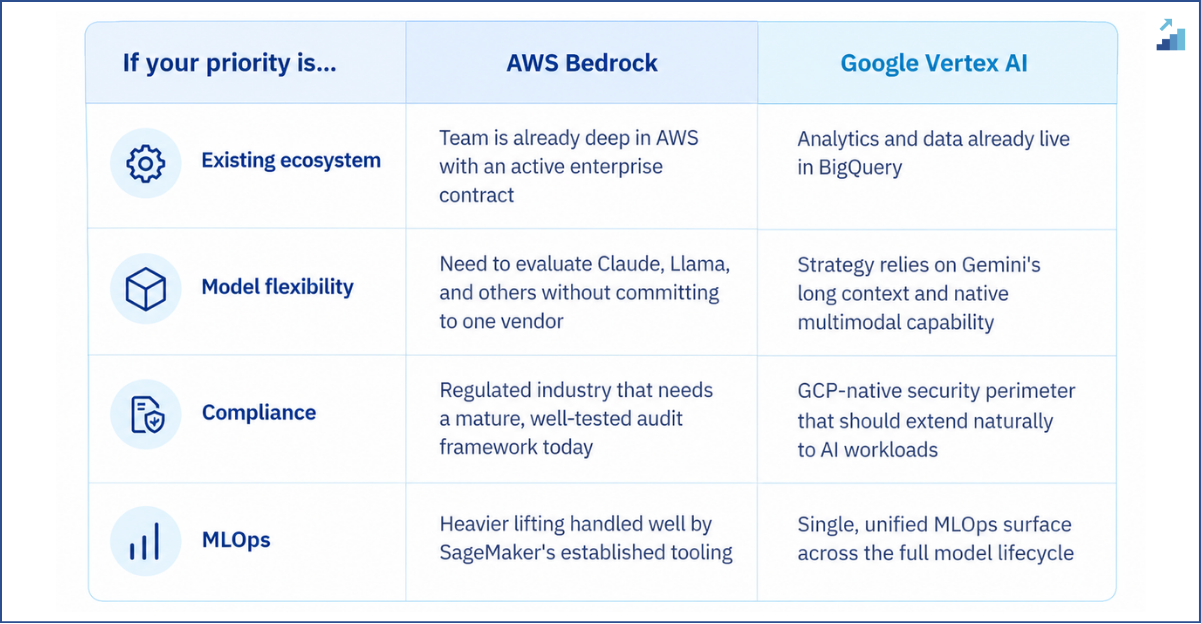
Fig. 6 - Choosing between Bedrock and Vertex AI by priority
My final piece of advice as a cloud engineer: avoid switching primary clouds solely for flashy AI capability unless there's a genuinely critical gap. The engineering friction, network latency, and configuration complexity of managing cross-cloud AI workloads rarely justify the perceived benefit. Build where your data already lives, lean on the native tools your chosen platform gives you, and focus on delivering tangible business value through intelligent, agentic systems. The AI infrastructure race is only just beginning, and both Google Cloud and AWS offer genuinely powerful canvases to build on.
Frequently asked questions
Can we run AI workloads across both AWS and GCP at the same time?
Technically yes, and some organisations do it for model access or redundancy. In practice cross-cloud AI adds network latency, duplicated identity and networking configuration, and two sets of governance to maintain. It is worth the overhead only when a specific model or capability is genuinely unavailable on your primary platform.
Should we switch clouds to get a better AI model?
Rarely. Migration cost, data egress, retraining your team and rebuilding the security perimeter almost always exceed the benefit of a marginally better model. Switch only when there is a critical capability gap you cannot design around, and price the migration fully before deciding rather than after.
Does using Bedrock or Vertex AI mean our data trains their models?
No. Both platforms state that enterprise customer data submitted through their managed AI services is not used to train the underlying foundation models. Confirm the specific terms for the model and region you are using, since terms differ by third-party model provider inside Bedrock's marketplace.
Are TPUs actually cheaper than GPUs for our workload?
It depends on workload shape. Tensor Processing Units tend to win on large synchronous training runs where the code is XLA-optimised, especially on preemptible pricing. GPUs usually win on mixed or inference-heavy workloads and anywhere your team relies on existing CUDA tooling. Benchmark your own job before committing either way.
Not sure which platform your data is pulling you toward?
Book a 45-minute discovery call. We map your data locations against your first AI use cases and give you a straight read on platform fit, no obligation, and no vendor preference on our side.
Book a discovery callAbhishek Bhagat
Technology specialist and regular contributor at BlueData Consulting, sharing insights on machine learning, cloud architectures, and digital transformations.